
Drain unblocking service in Amsterdam
Drain Unblocking Amsterdam
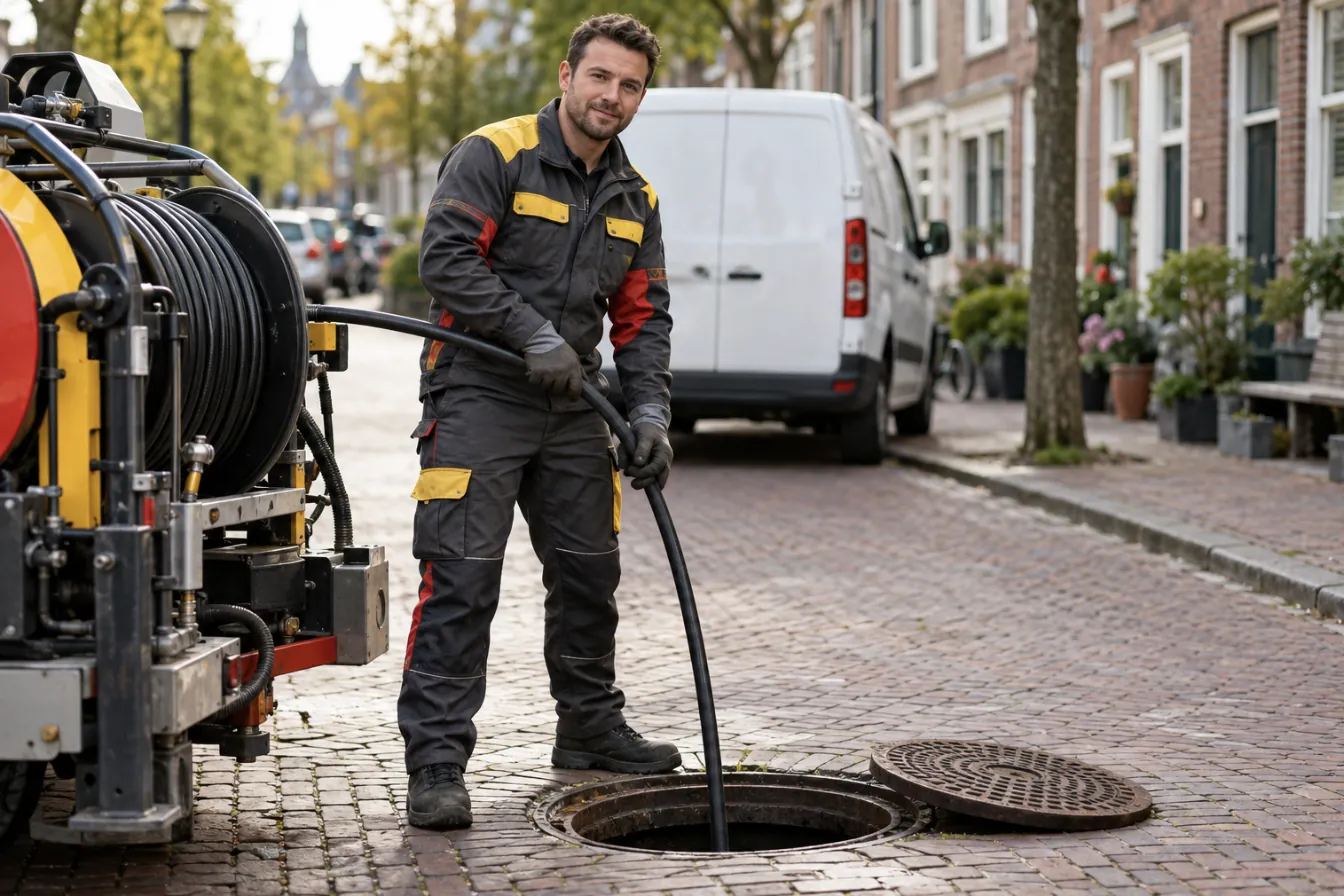
A slow shower, a gurgling toilet or water coming back up in your basement flat: for drain unblocking in Amsterdam, call Afvoer Ontstoppen, 24/7. We specialise in blockages, from the kitchen sink to the sewer connection under the pavement. Call us straight away, tell us what's wrong and you'll get a price estimate up front. An engineer then comes out with a drain snake, a high-pressure jetter and a camera, even in the middle of the night or on a Sunday.
- Population
- over 930,000
- Province
- North Holland
- Postcode (centre)
- 1012
- River
- Amstel
- Subsoil
- Peat and clay; older buildings stand on wooden piles
What we unblock in Amsterdam
-
Drain unblocking service in Amsterdam
Blockages in a toilet, kitchen, bathroom or sewer each need a different approach. As a drain unblocking company, we use drain snakes, high-pressure jetting and cameras, depending on the situation.
More about drain unblocking service -
Toilet unblocking in Amsterdam
The blockage could be in the bowl, the soil stack or the underground drain. We find out where the toilet is blocked first, then clear the drain thoroughly.
More about toilet unblocking -
Kitchen sink unblocking in Amsterdam
Grease, coffee grounds and food scraps slowly build up in the kitchen waste pipe until it blocks. We clear the sink and the pipe behind it, and flush it through with high-pressure jetting where needed.
More about kitchen sink unblocking -
Washbasin unblocking in Amsterdam
Hair and soap residue build up in the washbasin trap and waste pipe. We clean both and find out why the basin was slow to drain.
More about washbasin unblocking -
Shower drain unblocking in Amsterdam
Hair and soap scum build up in the shower drain and the pipe below it. We remove the blockage and clean the pipe along its full length.
More about shower drain unblocking -
Sewer cleaning in Amsterdam
Grease, silt and root intrusion gradually narrow a sewer pipe. Our high-pressure sewer cleaning flushes the whole length of the pipe clean, and we show you the cause.
More about sewer cleaning -
Drain camera inspection in Amsterdam
Recurring blockages always have a cause. A drain camera inspection lets you see live whether roots, subsidence or a broken pipe is to blame.
More about drain camera inspection -
Downpipe unblocking in Amsterdam
Leaves, moss and sand block the gutter, the downpipe or the pipe underground. We clear the whole route, so rainwater drains away again instead of running down your walls.
More about downpipe unblocking
Why drains in Amsterdam silt up faster
Amsterdam is built on soft ground. Beneath the streets lies a thick layer of peat and clay, and older buildings rest on wooden piles driven down into a firm layer of sand. That keeps the house itself more or less in place, but the ground around it is slowly settling. The sewer pipe between your home and the street sewer lies right in that sinking ground. After decades in the ground, a sewer connection like this can start to sag, leaving a low point where silt, grease and paper collect.
That's why a blocked drain in Amsterdam is by no means always at the kitchen sink or the toilet: it's often several metres further along, under the floor or the pavement. Simply unscrewing the trap won't achieve much in that case. So for drain unblocking in Amsterdam, we first work out where the water is backing up, and only then choose the tools for the job.
Elms along the canals and avenues
Amsterdam's quaysides and avenues are lined with elms. Their roots go looking for moisture and find it in old clay pipes whose joints have stopped sealing properly over the years. Within a few years, a hair-thin root can grow into a dense mat that holds back everything. The engineer can pull part of it out with a drain snake, but the rest simply grows back. When we unblock drains under Amsterdam's tree-lined quaysides and avenues, a root cutter removes the roots that have grown in. As long as the joint is leaking, though, the roots will keep coming back; a camera shows you whether a repair is needed.
Houseboats with a sewage pump
Most of Amsterdam's houseboats are now connected to the sewer. On board, a sump collects the waste water from the toilet, kitchen and shower, and a pump then forces it through a narrow pressure pipe to the connection on the quay. Wet wipes, grease and hair block a pump like this far more quickly than they block an ordinary sewer pipe. If you suddenly hear the pump running on for a long time, or it occasionally fails to start, that's often the first sign of a blockage building up. You can call us for drain unblocking on board a houseboat in Amsterdam too.
What kind of pipe lies under your building?
The type of pipe under your floor depends on when the building went up, and that partly determines how we go about unblocking a drain in Amsterdam. In canal houses and nineteenth-century homes, we still find cast-iron soil stacks and underground drains made of glazed clay. Glazed clay is hard and smooth, but the joints between the individual sections are its weak spot: that's where roots get in, and that's where the pipe sags first. In post-war neighbourhoods, the pipes under the garden are often clay or concrete, and since the 1970s PVC has been the standard, in renovations too. Old cast-iron pipes and the joints between clay pipes can't withstand caustic drain cleaners, and a pipe like that calls for an engineer who adjusts the pressure of the high-pressure jetter to the condition of the pipe. That's why, whenever you call us for drain unblocking in Amsterdam, we always ask what year your home was built.
Drain unblocking in Amsterdam: from canal house to harbour pier
The age of a building tells you a lot about where its drains usually get stuck. Here's what we come across most often when unblocking drains in Amsterdam, by type of neighbourhood.
City centre: rear houses and long pipes
Many canal houses are made up of a front house and a rear house, with a courtyard in between. The waste pipe from the kitchen and bathroom at the back then has to run underneath the entire front house to reach the sewer in the street. A pipe like that is long, has often been there for decades and has very little fall. If the building has been split into flats, four or five households may all drain into that one pipe. To unblock a drain in a building like this, it takes a machine with a long cable or a high-pressure hose tens of metres long to reach the blockage.
Spaarndammerbuurt and Staatsliedenbuurt: perimeter blocks
In the West borough you'll find perimeter blocks built between the late nineteenth century and the 1920s, including the famous brick architecture of the Amsterdam School in the Spaarndammerbuurt. The flats on each stairwell share a soil stack, which becomes an underground drain at the bottom and runs out to the street. In the Staatsliedenbuurt, much was rebuilt during the urban renewal years, but by no means always right down to the pipe under the pavement. A blockage in that last stretch can quickly cause trouble for a whole row of ground-floor flats at once.
Around the Albert Cuyp and the Dappermarkt: grease from small kitchens
In De Pijp and the Dapperbuurt, small restaurants, snack bars and lunch spots occupy the ground floor, with homes above them. It's not unusual for the business and the flats to share part of the drainage. Frying fat and cooking fat solidify in the cooler pipe and then trap rice, coffee grounds and napkins. A grease trap catches a lot of it, but only if it's emptied on time. In a building like this, unblocking the kitchen sink means jetting the pipe along its full length, so the upstairs neighbours don't have the same problem again a week later.
Garden suburbs in Nieuw-West and Buitenveldert: greenery above old sewer runs
Geuzenveld, Slotermeer, Osdorp and Buitenveldert were laid out spaciously after the war, with public gardens, green verges and tree-lined avenues. The trees planted back then are now fully grown, and their roots reach under the walk-up flats and terraced houses. Under the garden, the original run of concrete or clay pipes is sometimes still in place, even when the home itself has been renovated. A camera inspection shows whether the pipe is intact or whether roots are already narrowing the passage; when we unblock drains in Nieuw-West and Buitenveldert, it's often a sensible next step.
Noord and Zuidoost: sinking gardens and inspection chambers
North of the IJ you'll find places such as Tuindorp Oostzaan, built on soft ground where paths and gardens are visibly subsiding. The sewer connections sink along with them and lose their fall. In the flats of Buikslotermeer, water from a large number of homes comes together in long sewer runs. The low-rise housing in Gaasperdam has garden drainage with inspection chambers around the house; if you know where yours is, unblocking a drain there in Amsterdam-Zuidoost is usually a quick job.
Harbour piers and islands: flat pipe runs in new builds
On the former piers of the Oostelijk Havengebied (Eastern Docklands) and on Zeeburgereiland, the pipes are plastic and in good condition. The catch is that they often run horizontally for a long way through the flat to a central shaft, and in a pipe with so little fall, hair, soap residue and wet wipes easily get caught. So when we unblock drains on the piers of Amsterdam-Oost, we usually find the blockage inside the home.
Drain unblocking service in Amsterdam, from Centrum to Zuidoost
Our drain unblocking service in Amsterdam covers every district, and Weesp too, which has been part of Amsterdam since 2022. The buildings and the pipes differ from district to district, and so does the way we tackle a blocked drain. Below you can read, district by district, what we come across most often.
Drain unblocking in Amsterdam-Centrum: from the Red Light District to the Western Islands
In the old city centre around Dam Square, Warmoesstraat and Zeedijk, bars, restaurants, shops and homes are packed closely together. Around Rembrandtplein, Leidseplein and in Utrechtsestraat, restaurant kitchens and the flats above them often drain into the same old pipe, and there grease is the main cause of a blocked drain. In the Jordaan, around Westerstraat, Lindengracht and Rozengracht, and on the Western Islands, it's more often old, narrow buildings whose house connection under the pavement has started to sag in the sinking ground. In the Nine Streets, the Haarlemmerbuurt, the Plantage and on Kattenburg and Wittenburg, you can call us too, for anything from a blocked toilet to a blocked sewer pipe.
Drain unblocking in Amsterdam-West and Nieuw-West
In Oud-West and De Baarsjes, along Kinkerstraat, Overtoom, Jan Evertsenstraat and Hoofdweg, the flats stacked above each other in a walk-up block often share one soil stack. If it gets blocked at the bottom, the ground-floor flat is the first to notice; in Bos en Lommer and around Westerpark we see exactly the same pattern. That's why unblocking a drain in Amsterdam-West often starts at the rodding eye at the bottom of the stairwell. Further out, in Slotermeer around Plein '40-'45, in Geuzenveld, Osdorp and Slotervaart, the old sewer runs lie beneath green strips with large trees, as described above under the garden suburbs. In De Aker and Nieuw Sloten, built in the 1990s, the pipes are plastic and the blockage is more likely to be indoors or in the garden drain. So sewer unblocking in Amsterdam Nieuw-West calls for a different approach from one neighbourhood to the next.
Drain unblocking in Amsterdam-Zuid: De Pijp, Oud-Zuid and the Rivierenbuurt
In De Pijp, around Albert Cuypstraat, Ferdinand Bolstraat and Van Woustraat, there are narrow buildings from the late nineteenth century. During renovations, extra bathrooms and toilets have often been connected to the old drain, so one pipe handles more water than it was laid for. If the kitchen sink is blocked or the toilet flushes slowly, the cause is often that shared pipe, and unblocking the drain means going further than the trap alone. In Oud-Zuid, around the Vondelpark, Van Baerlestraat and Cornelis Schuytstraat, there are large town houses with basements, where the lowest drain is the first to fill with water after a downpour. In the Rivierenbuurt, around Scheldestraat and Maasstraat, and in the Stadionbuurt, there are walk-up flats from Plan Zuid with shared soil stacks. In Buitenveldert and around the Zuidas, it's mostly flats and apartments with long horizontal drains.
Drain unblocking in Amsterdam-Oost: from the Indische Buurt to IJburg
In the Indische Buurt around Javastraat, the Dapperbuurt, the Transvaalbuurt and the Oosterparkbuurt, the blocks date from the late nineteenth century to the 1930s. Most of the homes have been modernised, but the house connection under the pavement is often still old. So when we're called out to a blocked drain in Oost, the engineer brings both a thin drain snake and the big machine. In the Watergraafsmeer, around Middenweg and in Betondorp, the low-rise houses have their own garden drains with an inspection chamber. On IJburg, with Haveneiland, Steigereiland and Centrumeiland, and on Zeeburgereiland, everything is new and made of plastic. There, a blockage is usually in the pipes inside the home, not under the street.
Drain unblocking in Amsterdam-Noord
In Noord, old garden villages and new builds alternate. The Van der Pekbuurt, the Vogelbuurt, the Vogeldorp and Tuindorp Nieuwendam have many low-rise homes on soft ground, where garden drains slowly lose their fall. That's why, when unblocking drains in Noord, the engineer often starts at the inspection chamber in the garden. On the IJ waterfront, in Overhoeks, Buiksloterham and around the NDSM wharf, there are mainly new apartments where, as on the harbour piers, the blockage is usually inside the home. We also come out to rural Noord, to villages such as Durgerdam, Ransdorp and Holysloot, to unblock sewers in Amsterdam-Noord.
Drain unblocking in Amsterdam-Zuidoost and Weesp
In the Bijlmermeer, around Ganzenhoef and Kraaiennest, many flats stacked above each other share a single soil stack; a blockage at the bottom affects several households at once. In Gaasperdam, with Holendrecht and Reigersbos, low-rise housing with garden drains is the norm, just as it is in Driemond, which since 2022 has formed a separate city area together with Weesp. If you're looking for a drain unblocking company in Amsterdam-Zuidoost, you call the same number as in the rest of the city; here too the engineer is usually with you within the hour. In Weesp, with its old fortified centre on the river Vecht and the new-build district of Weespersluis, we unblock toilets, kitchen drains and sewer pipes just the same.
Downpours and backflow in the old city
In large parts of old Amsterdam, a single sewer carries both rainwater and household waste water. During a summer cloudburst, a combined system like this has to cope with enormous volumes of water in a very short time. Once it's full, the water takes the path of least resistance: back through the sewer connection to the lowest drain in the house. In the townhouses of the Plantage and along the canals, that's often the floor drain in the basement flat, where waste water from every floor of the building then comes up first. That's why, when we're called out to a blocked drain after a downpour, we always look at the house connection first.
These signs suggest your drains are already at their limit:
- the toilet or shower drain gurgles as soon as it rains hard;
- after a downpour, there's a thin layer of water around the drain in the basement flat or cellar;
- the downpipe overflows even though the gutter is clean;
- there's a sewage smell in the hallway or bathroom after rainfall.
If the drainage is blocked, even partly, the pipe has hardly any spare capacity and the first heavy downpour will cause problems.
Non-return valves and Amsterdam Rainproof
A non-return valve in the drain of a basement flat or cellar holds back sewage when the street sewer is full, provided the pipe behind it is clean. Have the valve checked every now and then, because dirt can get caught in it too. You can also take some of the pressure off the sewer yourself, with a water butt under the downpipe, a green roof or fewer paving slabs in the garden. Amsterdam Rainproof, an initiative of the municipality and Waternet, offers practical tips on this. If the water still doesn't drain away after the rain has stopped, the house connection is often partly blocked, and unblocking the drain is the first step.
Blocked sewer in Amsterdam: who is responsible for what?
If the blockage is under the pavement or in the garden, you'll want to know whose job it is to get it sorted. The dividing line is roughly the same throughout the Netherlands.
On your own property
Anything on your own land is, as a rule, the responsibility of the building's owner: the drains in the house, the underground drain beneath the floor and the garden pipe up to roughly the property boundary, where there's often a rodding eye or a small inspection chamber. A blockage on your side of that point is therefore yours to get cleared.
Under public ground
The street sewer belongs to the municipality, and usually so does the section of the sewer connection under the pavement; in Amsterdam, the public sewer is managed by Waternet. Exactly where the line falls at your property depends on the situation. Our engineer uses a drain snake or camera to establish where the blockage is. If it's on the street side, you'll know straight away and can report it to them.
Building split into flats, or a rented home
Many Amsterdam buildings have been divided into flats. The soil stack and the pipe to the street are then usually communal, which makes them a matter for the VvE (owners' association); the deed of division sets out which parts are private. If you rent, the landlord or housing association usually deals with a blockage in a shared pipe, while a blocked trap is often down to the tenant. If water is about to overflow and nobody can be reached, have the problem dealt with first and sort out the costs afterwards.
Sewer service in Amsterdam: unblocking and cleaning sewers
If the sewer is blocked, several drains often stop draining at the same time. Our sewer service in Amsterdam focuses on the underground drain beneath the floor and the house connection to the street. When unblocking a sewer in Amsterdam, the engineer first breaks up the blockage and then cleans the pipe with the high-pressure jetter, so grease and silt don't immediately form a new blockage.
Where to find the rodding point in an Amsterdam building
Many Amsterdam streets have no front gardens; the facade stands right on the pavement. The rodding eye or inspection chamber is then indoors: in the cellar, under the stairs, in the meter cupboard or behind a hatch in the hallway. If you don't know where it is, the engineer will find it. With a blocked sewer he prefers to work from such a point, because it lets him reach the underground drain and the house connection in one go. That makes unblocking a sewer in Amsterdam quicker and less messy indoors.
Toilet unblocking in Amsterdam, at night too
If a drain is blocked or the toilet is overflowing, it rarely waits until office hours. That's why you can call us for drain unblocking in Amsterdam in the evening, at night and at the weekend too. Unblocking a toilet in a student house in Oost, clearing a kitchen drain in an upstairs flat in West or jetting a sewer run under a courtyard garden in Zuid: the approach is always the same. You call, you get a price estimate, and an engineer with a drain snake, a drain machine and a high-pressure jetter comes out to you. Outside office hours the out-of-hours rate applies, and you'll hear it before he sets off.
The blockages we clear in Amsterdam
As a drain unblocking company, we deal exclusively with blockages: when we unblock drains in Amsterdam, that means the drains in your home and the sewer pipes behind them. For toilet unblocking, the engineer uses a toilet snake that reaches through the bowl into the soil stack, without removing the toilet. In the kitchen, solidified grease is the main culprit, so kitchen sink unblocking goes beyond the trap and takes in the pipe inside the wall too.
For shower drain unblocking in new builds with long horizontal pipes, the engineer works with a thin drain snake or a small high-pressure hose. If the blockage is deeper, in the sewer connection or the garden sewer, sewer cleaning with the high-pressure jetter is the next step. Want to know whether roots or subsidence are to blame? A drain camera inspection will show you.
Camera inspection in Amsterdam: when is it worthwhile?
A camera inspection isn't a standard part of unblocking a drain in Amsterdam, but it's sometimes the quickest route to a solution. Think of a blockage that keeps coming back within a few months, suspected root ingrowth under the garden or the pavement, foundation repairs in which pipes were disconnected and then reconnected, or the purchase of an old building. On the screen you see exactly what the engineer sees, and with a transmitter in the camera head, they can pinpoint the location of a break or a sag from above ground.
Restaurants, shops and owners' associations in Amsterdam
In the city centre and in neighbourhoods such as De Pijp and Oud-West, restaurants, cafés and shops sit beneath people's homes. There it pays to have the drains cleaned before they block up. For restaurants and cafés with a grease trap, and for VvEs with a shared soil stack, we can clean the pipes before and after the grease trap, or the soil stack itself, at regular intervals, so that a blocked drain doesn't turn into an emergency job on a Friday evening. You can ask for a price for this kind of maintenance in advance.
Drain unblocking in Amsterdam: which technique when?
The method the engineer chooses depends on where the blockage is and what kind of building it's in. When we unblock drains in Amsterdam, there are broadly three techniques we use, often in combination.
Plunger, hand-held drain snake and toilet snake
If the blockage is just behind the trap or in the toilet bowl, a professional plunger or a short hand-held drain snake is often enough. For a toilet, the engineer uses a toilet snake with a protective sleeve, so the porcelain isn't damaged. In a narrow toilet off the hallway or a cramped bathroom up under the roof, these compact tools are ideal, because a large machine won't always fit up the stairs.
Electric drain machine for long pipes
If the blockage is further down, for example in the soil stack or in the underground drain beneath the front house of a canal house, the engineer uses an electric drain machine. Its rotating cable with a cutting head breaks up grease, paper and small roots. This is the method we use most often in Amsterdam, because so many pipes here are long and have little fall.
High-pressure jetting for grease, silt and sand
A drain cable punches a hole through the blockage, but often leaves the build-up on the inside of the pipe behind. With grease from restaurant kitchens, silt in a sagging house connection or sand that has washed in through a downpipe, the engineer therefore cleans the pipe with high-pressure water along its full length. That way, once the drain has been unblocked, the pipe usually stays clear for longer than it would after using a cable alone.
Drain unblocking in Amsterdam: how it works
First, the call
For drain unblocking in Amsterdam, call 085 333 4698 at any hour of the day or night. We'll ask exactly what's happening: which drain is blocked, whether other drains are also running slowly and whether the problem gets worse after rain. From your answers, we'll give you a first idea of the likely cause and a price estimate. If you're happy to go ahead, an engineer comes out to you, usually within the hour.
Getting to work
On arrival, the engineer's first task is to find the point where the water is backing up. Sometimes a plunger or a hand-held drain snake is enough; if the blockage is in the sewer connection, out comes the electric drain machine or the high-pressure jetter. When the job's done, they show you what came out of the pipe. If they have doubts about the condition of the pipe, they'll suggest a camera inspection, so you're not left guessing.
After the job
Once the blockage has been cleared, the engineer runs plenty of water through all the drains, including while the toilet is being flushed. You'll hear what caused the blockage, whether anything needs doing to the pipe and how to stop the same drain from blocking up again any time soon. If the blockage was in a shared pipe, they note exactly where it was, so you can take it up with the VvE or your landlord.
Problems we often hear about in Amsterdam
Blocked toilet in a ground-floor flat
If you live on the ground floor of a walk-up block and the water in your toilet bowl rises whenever someone upstairs flushes, the blockage is in the shared soil stack or the underground drain, not in your own toilet. Stop flushing, knock on your neighbours' doors and ask them to use as little water as possible. The engineer works towards the blockage through the rodding eye or the outside inspection chamber.
A sink that stays full after the washing-up
In upstairs flats, the kitchen waste pipe often runs a fair distance through the wall or under the floor to the soil stack. First the water drains away slowly, then not at all. A clean trap won't help much at that stage (you can read how to unscrew it further down this page): the grease is sitting in that long stretch of pipe, and clearing it takes the engineer's drain machine.
Sewage smell or drain flies around the drain
If your bathroom smells of sewage, or small grey flies are fluttering around the shower drain, there's often a layer of sludge in the trap or the pipe. These flies, known as drain flies or moth flies, lay their eggs in it. A water seal that has dried out or a blocked vent pipe on the roof can also cause a sewage smell. The engineer cleans the drain, checks the traps and, if necessary, uses a camera to see whether there's a crack or a sag in the pipe. In an old building in the city centre, that's by no means an unnecessary luxury.
Drain unblocking in Amsterdam: the costs at a glance
With us, drain unblocking in Amsterdam costs from €129. The call-out charge isn't included; we'll tell you what it is over the phone before anyone sets off. An out-of-hours rate applies in the evening, at night, at weekends and on public holidays. For larger jobs, such as cleaning a long sewer run under an enclosed courtyard garden or inspecting an entire sewer connection, you can ask for a quote first. You get a price estimate up front, and then the decision is yours. Customers rate us 5/5 based on 48 Google reviews.
What the price of drain unblocking in Amsterdam depends on
What you end up paying depends mainly on four things. The time: on weekdays during the day the standard rate applies, and outside those hours the out-of-hours rate. Where the blockage is: a trap or a toilet is cleared more quickly than a house connection under the pavement. Access: in a canal house with a rodding eye behind a cupboard, the work takes longer than in a terraced house with an inspection chamber in the front garden. And the length and condition of the pipe: cleaning a long sewer run under a courtyard garden or carrying out a camera inspection is more work than rodding through a short drain. Before we start, you'll hear which of these factors play a part in your situation.
How to keep the costs down
If the problem can safely wait, have your drain unblocked during the day on a weekday; that way you won't pay the out-of-hours rate. Clear the way to the inspection chamber or rodding eye beforehand, so the engineer doesn't have to go looking for it first. On the phone, tell us as precisely as you can which drains are causing trouble and whether the neighbours are having problems too: the better our assessment, the more precisely the engineer can choose which tools to bring. And if the blockage is in a shared pipe, check with the VvE or your landlord who pays the bill.
My drain in Amsterdam isn't draining properly: what now?
A drain that empties slowly is often the start of a blockage. A few questions will help you judge for yourself how serious it is and whether you need an engineer to unblock it:
- Is it just one drain? If only the washbasin, the kitchen sink or the shower is slow to empty, the blockage is usually in the trap or the first stretch of pipe. You can often sort that out yourself.
- Is water coming up somewhere else? If the water rises in the shower when the washing machine pumps out, or in the toilet when the upstairs neighbours flush, the blockage is in a shared pipe. Call us straight away.
- Can you hear bubbling or gurgling? Then air is forcing its way past a partial blockage, or the vent pipe is blocked. Don't wait until the pipe is completely blocked.
- Does it only happen after a downpour? Then the sewer is struggling with the volume of rainwater. Further up this page, you can read what to do about backflow.
- Can you smell sewage? A trap that has dried out can be fixed with a bucket of water; if the smell lingers, something more is going on.
Not sure? Call 085 333 4698 and describe what you're seeing. We'll tell you on the phone whether your drain needs unblocking today, or whether it can wait until a quieter moment.
Drain unblocking in Amsterdam: try it yourself or call us?
You can often tackle a minor blockage yourself, as long as only one drain is affected. Here's how to go about it, depending on where in the house the problem is.
A kitchen sink that drains poorly
First remove the standing water with a mug and put a bucket under the trap. Unscrew the trap by hand, clean it out in the bucket and screw it back on hand-tight. If that doesn't help, pour hot but not boiling water with a good squirt of washing-up liquid into the sink; that softens a layer of grease that's just starting to build up. If you have a double sink, seal the second drain with a wet cloth before you use the plunger. If the water still won't go down, the grease is further down the pipe, and unblocking that drain is a job for the engineer.
Shower drain and washbasin full of hair
In the bathroom, hair is the main culprit. Lift the grate off the shower drain and pull the hair out wearing a glove or with a plastic hair-removal tool. Take out the odour trap, rinse it clean and put it back properly. In a washbasin, the dirt often collects around the plug or in the trap. When you use a plunger, block the overflow with a wet cloth, otherwise the pressure escapes. If that doesn't work, the next step is for the drain to be unblocked with a thin drain snake.
Blocked toilet in Amsterdam: don't keep flushing
If the water is high in the bowl, don't flush again. Bail out some of the water and try a flanged toilet plunger, calmly, about ten times. If nothing shifts, or if something has fallen into the bowl, stop. In many Amsterdam walk-up blocks, the toilet is connected directly to the shared soil stack, and if you keep flushing, it may end up affecting the neighbours downstairs.
Washing machine or dishwasher not draining
If water stays in the drum, or the dishwasher no longer pumps out, the appliance isn't always to blame. First clean the pump filter or the filter screen. Then hang the drain hose in a bucket and let the appliance pump out; hold on to the hose and stop in time, because a washing machine pumps out more water than a bucket can hold. If the bucket simply fills up, the pump is working and the blockage is in the drain or the trap that the hose is connected to. In Amsterdam kitchens, the dishwasher and the sink usually share one drain, so the water will often come up in the sink as well. In that case, it's unblocking the drain that solves the problem, not buying a new appliance.
When to stop
Stop trying it yourself if two attempts get you nowhere, if several drains are playing up at the same time, if water is coming up at the lowest point in your home or if there's sewage standing in the basement flat. Don't use a caustic drain cleaner either: in an old cast-iron pipe or at the joints of clay pipes, it does more harm than good. At that point, unblocking the drain is a job for an engineer with a drain snake, a drain machine and a high-pressure jetter.
While you wait for the engineer: limiting the damage and preventing a repeat
While you're waiting for the engineer, the blockage will rarely get worse if you leave it alone for a while, but it will if you keep flushing. Switch off the washing machine and dishwasher, move your belongings up off the floor if you live in a basement flat, and clear the way to the inspection chamber, whether it's in the cellar, the meter cupboard or the front garden. Leave caustic drain cleaners in the cupboard: caustic soda can react with grease to form a soapy plug, and it splashes back easily.
A few simple habits help stop it happening again:
- let frying fat cool and put it in the general waste bin;
- only flush toilet paper, never wet wipes or kitchen roll;
- clean the gutter and the leaf guard on the downpipe in autumn, especially under elm trees;
- have an old sewer connection jetted through every few years.
Drain unblocking in Amsterdam: what customers often ask us
Can I use drain cleaner from the supermarket?
We'd rather you didn't. Harsh drain cleaners won't dissolve a blockage made of wet wipes, kitchen roll or an object, they attack old cast-iron pipes and the joints between clay pipes, and they stay in the pipe as a caustic liquid. That makes unblocking the drain afterwards more difficult, and riskier for the engineer. If you've already used a product, please tell us when you call.
Is the blockage on my side or the municipality's?
You can often tell from the inspection chamber at the property boundary or in the cellar. If it's dry while your drains are filling up, the blockage is on your side. If the chamber is full, the problem lies further towards the street sewer, which in Amsterdam is managed by Waternet. The engineer establishes where it is with a drain snake or camera, so you know where to report it. That often saves a discussion afterwards.
Who pays for drain unblocking in a rented home or a VvE building?
A blocked trap, or a toilet that has become blocked through the residents' own use, is usually the resident's responsibility. A blockage in the communal soil stack or the pipe to the street is often a matter for the VvE in an apartment building, and for the landlord in a rented home. You'll find exactly how this is divided in your tenancy agreement or the deed of division. If you have a drain unblocked in Amsterdam while the landlord or VvE can't be reached, keep the invoice.
Do you also work in Amstelveen, Diemen and Duivendrecht?
Yes. We come out not just for drain unblocking in Amsterdam itself, but also in the surrounding municipalities, such as Amstelveen, Diemen, Ouder-Amstel (including Duivendrecht), Landsmeer and Oostzaan. You call the same number and the approach is exactly the same, with a price estimate up front.
Unblocking drains around Amsterdam
As well as drain unblocking in Amsterdam, we work throughout the Netherlands, so outside the ring road too. North of the IJ we work in Zaandam, towards the coast in Haarlem and near Schiphol in Hoofddorp. Across the IJmeer lies Almere, and further south you can call us in Utrecht. To see which cities have their own page, take a look at our service area.
Water already standing in the shower tray? Call 085 333 4698 for drain unblocking in Amsterdam, at any time of the day or night.
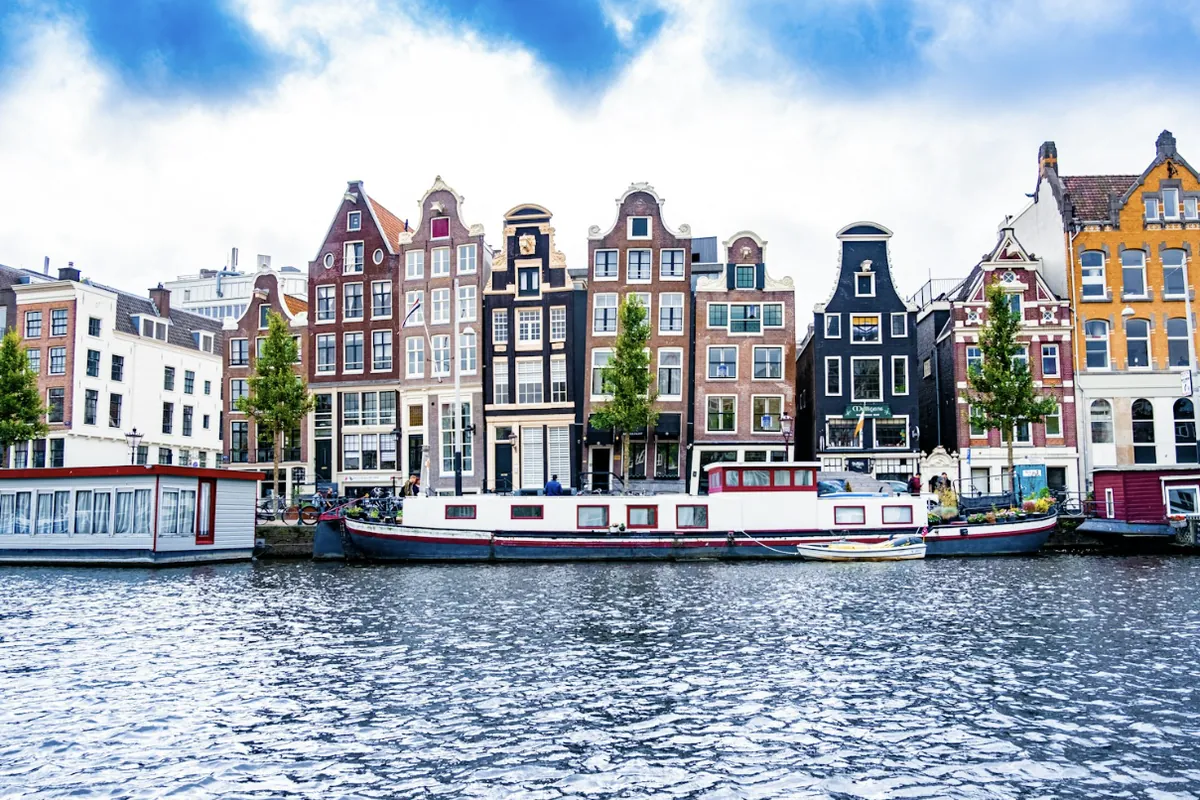
Drain unblocking from Tuindorp Oostzaan to Gaasperdam
- SpaarndammerbuurtAmsterdam School blocks from around 1920, with shared soil stacks in cramped stairwells.
- StaatsliedenbuurtNineteenth-century working-class streets, largely rebuilt, with sewer connections from different eras.
- JordaanNarrow buildings around Westerstraat and Rozengracht, often with an old, sagging house connection under the pavement.
- PlantageStately townhouses with basement flats, where the lowest drain overflows first when the sewer backs up.
- De PijpLate-nineteenth-century blocks around the Albert Cuyp, with upstairs and downstairs flats on one shared drain.
- DapperbuurtSmall eateries around the Dappermarkt and flats above shops, with grease-laden kitchen drains.
- Oostelijk HavengebiedFlats on former harbour piers, with long horizontal waste pipes running right through the home.
- ZeeburgereilandRecent new builds, where blockages are mostly caused by wet wipes, hair and frying fat.
- RivierenbuurtPlan Zuid walk-up flats, where homes stacked one above the other share a single soil stack.
- BuitenveldertSpaciously laid-out 1960s district with plenty of street trees growing above the sewer connections.
- GeuzenveldPost-war garden suburb with renovated homes, some still connected to their original sewer pipes.
- Tuindorp Oostzaan1920s garden village on soft ground, where gardens and pipes are slowly subsiding.
- BuikslotermeerFlats and family homes from the 1960s and 1970s with long shared sewer runs.
- GaasperdamLow-rise housing from the 1970s and 1980s, with garden drains and inspection chambers around the home.
Beyond Amsterdam, we cover the whole province: drain unblocking in North Holland.
Rates per job
Before the engineer sets off, we'll give you a price estimate. If more turns out to be needed on site, we'll discuss it with you first.
Call-out charge not included.
Questions about drain unblocking in Amsterdam
The waste water on my houseboat has stopped draining away. Can you help?
Yes, as long as it's a blockage. On many houseboats, a pump pushes the waste water to the sewer on the quayside. Wet wipes, grease and hair often block that pump or the narrow pressure pipe. The engineer clears the pipe and checks that the pump is pumping away properly again. If the pump itself is faulty, you'll hear straight away.
After a downpour there's water around the drain in my basement flat. What now?
That means the sewer can't cope with the rainwater and is pushing water back to the lowest point in your home. Use as little water as possible for now and move your belongings up off the floor. Call us if the water doesn't go down by itself. The engineer cleans the sewer connection and discusses whether a non-return valve would be worthwhile in your case.
How much does drain unblocking in Amsterdam cost?
Unblocking costs from €129. The call-out charge isn't included; we'll tell you what it is over the phone. An out-of-hours rate applies in the evening, at night, at weekends and on public holidays. For larger jobs, such as cleaning a sewer run under an enclosed courtyard garden or a camera inspection, you can ask for a quote first.
Do you also come out to Amsterdam-Noord and Zuidoost?
Yes, we work in every borough, from Tuindorp Oostzaan to Gaasperdam and from Geuzenveld to Zeeburgereiland. The engineer is usually with you within the hour. To reach Noord, they drive through the IJtunnel or the Coentunnel, so it can take a little longer in rush hour. We'll tell you on the phone what time to expect them.
Still have a question? Have a look in our FAQ section.
Blocked drain in Amsterdam?
Call now for professional drain unblocking. Price estimate up front, available 24/7, throughout the Netherlands.