
Drain unblocking specialist
Toilet unblocking by specialists
Unblocking a toilet seems simple enough, until the water rises higher in the bowl with every flush and plunging gets you nowhere. By then the blockage is often beyond the trap built into the porcelain: in the connection to the wall or floor, in the soil stack or even in the underground drain. Afvoer Ontstoppen deals with blocked toilets 24/7. Call us, get a price estimate up front, and an engineer with a toilet auger and an electric drain machine will be with you as soon as possible.
Signs of a blockage
If you notice one or more of these signs, your drain is probably blocked, or partly blocked. Not sure? Call us for advice.
- Water rises to just below the rim after flushing
- Bowl empties very slowly after a flush
- Gurgling in the bowl when the shower is running
- Downstairs toilet fills up when someone flushes upstairs
- Sewage smell around the base of the toilet
- Water level in the bowl lower than usual
How we unblock it
-
Questions over the phone
We'll ask whether just the toilet is affected or the shower and washbasin as well, which floor the toilet is on and what might have been flushed. Then we give you a price estimate.
-
Bowl and connection
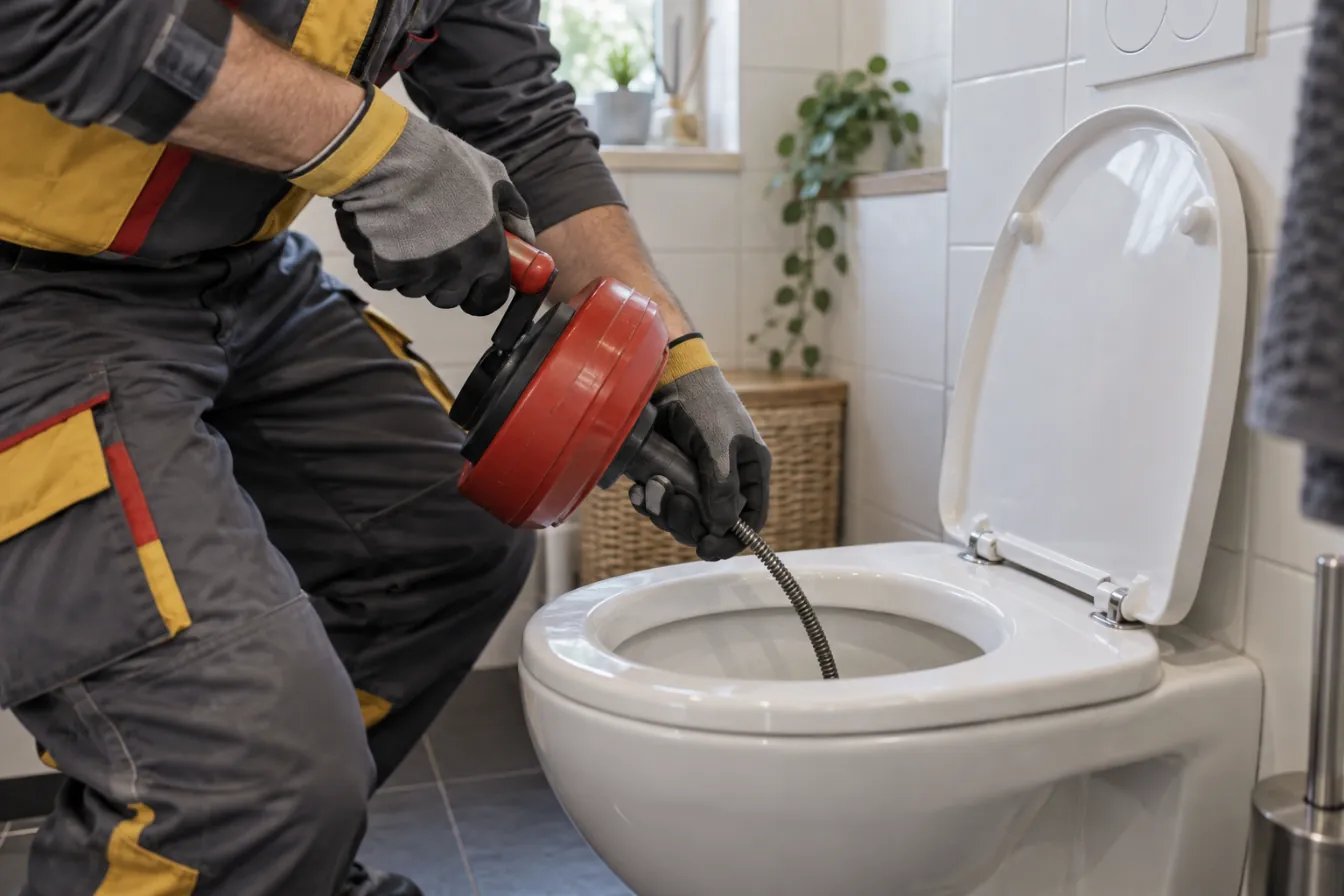
The engineer starts by working a toilet auger through the trap in the bowl. If the blockage isn't there, they carry on through the connection to the wall or floor.
-
Machine or jetting
If the blockage is in the soil stack or underground drain, the engineer goes in through a rodding eye or inspection chamber with an electric drain machine or a high-pressure jetter.
-
Flushing through and checking
Once the toilet is clear, the engineer flushes it a few times and tests the other drains as well. They'll tell you what was in the pipe and how to stop it happening again.
How a toilet gets blocked
A toilet carries away more solids than any other drain in the house. Yet the narrowest point is usually not in the pipe but in the toilet itself. The curved trap inside the porcelain, which holds the water in the bowl and keeps sewer smells out, is narrower than the 90- or 110-millimetre waste pipe behind it. Anything that gets through the trap will usually make it the rest of the way. But not always.
What doesn't belong in the toilet
The toilet blockages we deal with are often caused by things that don't belong there:
- wet wipes and baby wipes, which don't break down the way toilet paper does;
- kitchen roll and tissues, which are made to keep their shape when wet;
- sanitary towels, tampons and cotton buds;
- cat litter, which clumps into a hard mass in water;
- a toothbrush, a toy, or a toilet block that has slipped out of its holder.
Causes in the pipe itself
Sometimes the problem isn't what gets flushed but the pipe itself. A horizontal waste pipe without enough fall leaves paper stranded halfway along. The effect is worse with the smaller flush of a water-saving toilet, especially in older homes where the toilet was moved at some point and the waste pipe now takes a long detour. Inadequate venting can play a part too. If the soil stack doesn't get enough air, the water seal in the bowl can be sucked out. You'll notice gurgling and a water level that's lower than usual.
A blockage further down the system
If the water stays up in the bowl and the shower next to it is also slow to drain, the blockage isn't in the toilet but further along. In a flat, that's often the bend at the bottom of the soil stack; in a house, it's often the underground drain to the street.
How to tell how far the blockage goes
The classic picture: the toilet won't flush away, the water rises to just below the rim and then drains very slowly. Before you try anything, it's worth finding out how far the problem extends. If the water in the bowl isn't up to the rim, run the washbasin tap for half a minute and watch the toilet. If the toilet gurgles or the water rises, the two share a blocked pipe further down. If nothing happens, the blockage is probably in the bowl or just behind it.
If you have an inspection chamber in the garden or by the front door, lift the cover. If it's full, the blockage is further towards the street. If it's empty but the toilet still won't drain, the problem lies between the toilet and the inspection chamber. Knowing this helps us work out over the phone what the job will involve.
Unblocking a toilet yourself: what you can try
If only the toilet is blocked and the other drains are still working, you can try the following:
- Don't flush again. Every flush adds more water to a bowl that's already full.
- If the water level is high, use a small container to bail some of it out into a bucket, so you have room to work.
- Place a flanged toilet plunger over the outlet, push down gently and then pull it back sharply. Repeat this about ten times.
- If that doesn't work, pour hot but not boiling water with a squirt of washing-up liquid into the bowl and leave it to soak for a while.
A toilet plunger only reaches what's stuck in the bowl or just behind it. If the water still won't go down after a few rounds, the blockage is further along the pipe, and more force is more likely to make things worse than better.
Why we advise against chemical drain cleaners
Caustic soda and sulphuric acid drain cleaners aren't designed for a bowl full of water. They get diluted and won't dissolve a wad of wipes, let alone a solid object. What they can do is damage the rubber pan connector between the toilet and the waste pipe, and they leave a corrosive liquid standing in the bowl. That's a splash risk for you and for the engineer who has to work on it afterwards.
When to stop
Call us if the water still hasn't gone down after ten minutes of plunging, if something hard has fallen into the toilet, if other drains are affected, or if water comes up downstairs when someone flushes upstairs. A plunger only pushes an object further into the pipe, and then a small job turns into a big one.
How we unblock a toilet
When a toilet is blocked, many people's first thought is a plumber, but unblocking toilets is exactly the work our engineers go out for. We work from the top down: first the bowl, then the connection, then the pipe behind it. That way nothing gets taken apart unnecessarily.
Toilet auger and bowl
The first step is almost always the toilet auger: a short, sturdy coil with a protective sleeve that stops it damaging the porcelain. We use it to break up a blockage in the trap or to retrieve an object. If that doesn't work from above, we can take the toilet off if necessary, whether it's a floor-standing model or a wall-hung toilet on a concealed frame. That gives us access to the connection from behind.
Soil stack and underground drain
If the blockage is further down, we work through the rodding eye in the soil stack or through the inspection chamber outside. An electric drain machine can feed the coil a long way into the pipe. Where there's grease, urine scale or silt, we follow up with high-pressure jetting so the pipe is clean along its full length again. Once the toilet is unblocked, we flush it several times and check the shower and washbasin too.
Camera inspection for recurring problems
If the same toilet keeps getting blocked, there's often a structural cause: a sagging underground drain, a wrongly connected bend or roots in the pipe. A camera inspection of the drains shows you exactly what's going on before you decide on any repairs.
What toilet unblocking costs
Unblocking a toilet costs from €129. The call-out charge is not included: it comes on top, and we'll tell you the amount beforehand. In the evening, at night, at weekends and on public holidays an out-of-hours rate applies. If the job involves more than clearing a blockage, such as cleaning a long underground drain, you can ask for a quote first. You'll always get a price estimate over the phone before the engineer sets off. What you end up paying depends mainly on where the blockage is: in the bowl it's a quick job, in the underground drain it's more work.
Blocked toilet in the evening or at night
A toilet that won't flush can rarely wait until Monday, especially if it's the only one in the house. That's why we unblock toilets day and night, including on Sundays and public holidays. The engineer is usually with you within the hour. In the meantime, don't flush again, lay a few old towels around the base of the toilet and ask everyone else in the house not to use the shower or washing machine for now. That keeps any damage to a minimum if the water does rise.
How to stop it happening again
A few simple habits will keep the drain clear:
- keep a bin with a lid in the toilet for wipes and sanitary products;
- if you have a water-saving toilet, use the large flush button for everything except urine;
- teach children that toys don't belong in the toilet, and consider a child lock on the lid if you have toddlers;
- never flush cat litter, even if the packaging says you can.
If you notice the bowl emptying more and more slowly, don't wait until it's completely blocked. A partial blockage is quicker and easier to clear.
Where we unblock toilets
Our engineers cover cities including Amsterdam, The Hague, Tilburg and Enschede. We work throughout the Netherlands, and our service area overview lists the cities with their own page. If the shower is slow to drain as well, see our page on shower drain unblocking. For an overview of how we work in general, see our drain unblocking service page.
Toilet blocked right now? Call 085 333 4698 and we'll talk you through it straight away.
Rates per job
Before the engineer sets off, we'll give you a price estimate. If more turns out to be needed on site, we'll discuss it with you first.
Call-out charge not included.
Toilet unblocking: questions and answers
Can I pour a bucket of hot water down the toilet?
Only if the water isn't already up to the rim. Hot water from the tap can soften paper, but never pour boiling water into the bowl: a sudden change in temperature can crack the porcelain. Pour it all in at once and wait 15 minutes before checking whether the level has dropped.
My child has flushed a toy down the toilet. What should I do?
Don't flush again and don't use a plunger, because that only pushes the object further into the pipe. Hard toys often get stuck in the toilet's trap, where the engineer can retrieve them with a grabber or an auger. Sometimes the toilet has to come off to get at it properly. When you call, tell us exactly what was flushed.
Why does my new water-saving toilet block more easily?
A water-saving toilet uses less water per flush. In a modern pipe with enough fall that isn't a problem, but in a long, older waste pipe without a proper gradient the water sometimes doesn't have the force to carry everything away. Paper then gets left halfway along. Use the large flush button, and if the problem keeps coming back, have the pipe inspected.
How much does it cost to have a toilet unblocked?
Unblocking a toilet costs from €129, call-out charge not included. Outside office hours, meaning in the evening, at night, at weekends and on public holidays, an out-of-hours rate applies. If a long stretch of underground drain needs cleaning or you'd like a camera inspection, you can ask for a quote. You'll always get a price estimate up front.
The toilet in my flat is filling up with water from the neighbours upstairs. What should I do?
The blockage is most likely at the bottom of the shared soil stack. Stop using water yourself, ask the neighbours to do the same and report it to your landlord or the owners' association (VvE). If the water keeps rising, call us straight away. We'll clear the pipe through the rodding eye or the inspection chamber outside, so the water can drain away again.
Still have a question? Have a look in our FAQ section.
More drain unblocking services
-
Drain unblocking service
Blockages in a toilet, kitchen, bathroom or sewer each need a different approach. As a drain unblocking company, we use drain snakes, high-pressure jetting and cameras, depending on the situation.
-
Kitchen sink unblocking
Grease, coffee grounds and food scraps slowly build up in the kitchen waste pipe until it blocks. We clear the sink and the pipe behind it, and flush it through with high-pressure jetting where needed.
-
Washbasin unblocking
Hair and soap residue build up in the washbasin trap and waste pipe. We clean both and find out why the basin was slow to drain.
-
Shower drain unblocking
Hair and soap scum build up in the shower drain and the pipe below it. We remove the blockage and clean the pipe along its full length.
-
Sewer cleaning
Grease, silt and root intrusion gradually narrow a sewer pipe. Our high-pressure sewer cleaning flushes the whole length of the pipe clean, and we show you the cause.
-
Drain camera inspection
Recurring blockages always have a cause. A drain camera inspection lets you see live whether roots, subsidence or a broken pipe is to blame.
-
Downpipe unblocking
Leaves, moss and sand block the gutter, the downpipe or the pipe underground. We clear the whole route, so rainwater drains away again instead of running down your walls.
Blocked drain? We'll sort it.
Call now for professional drain unblocking. Price estimate up front, available 24/7, throughout the Netherlands.